

|
||
|
|
||
|
||
|
PCC helps fund Notts man’s journey from homelessness to hope |
||
|
A Nottingham man who spent more than a decade trapped in a cycle of homelessness, substance use and prison says he has finally found hope thanks to a pioneering recovery programme predominantly funded by Nottinghamshire Police and Crime Commissioner Gary Godden.
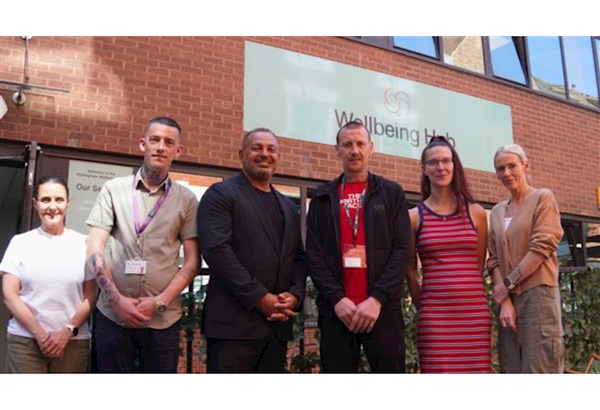
PCC Godden recently met Duik, who is 38 and from Nottingham, at the Nottingham Wellbeing Hub to hear first-hand how Open2Recovery, alongside the Clean Slate programme, has helped him begin breaking a cycle of substance use and offending that had dominated much of his adult life.
The PCC’s Office provides a large amount of funding for Open2Recovery, alongside donations from a wide range of retailers, suppliers and other agencies which are vital to support the delivery of the scheme. The investment supports the PCC’s Police and Crime Plan commitment to prevent crime and reduce reoffending by addressing underlying issues such as substance use, homelessness and poor mental health.
For more than a decade, Duik experienced homelessness, chronic substance use and repeated prison sentences. More than thirty treatment episodes were recorded, but a familiar pattern would emerge: Duik would engage with services following his release from custody before returning to substance use, disengaging from treatment and ultimately finding himself back in the criminal justice system.
A significant change came after his referral to Open2Recovery, a partnership pathway which helps people experiencing repeated cycles of substance use and offending access support that meets their individual needs. Whether residential rehabilitation or community treatment, Open2Recovery creates bespoke pathways that support longer-term recovery.
PCC Godden said: “When people think about tackling crime, they often think about arrests, investigations and prosecutions. Those things are absolutely vital, but preventing crime is just as important.
“One of my key priorities is reducing reoffending by addressing the issues that so often sit behind criminal behaviour. Addiction, homelessness, poor mental health and trauma can all play a part in bringing people into contact with the criminal justice system, and unless we tackle those root causes, the cycle simply continues.
“That’s why I’m proud that my office provides the majority of funding for Open2Recovery, alongside support from businesses that recognise the impact repeat offending can have on their staff, customers and communities.
“Duik’s story demonstrates exactly why that investment matters. Recovery isn’t always a straight line, but helping somebody move away from addiction and offending can mean fewer crimes, fewer victims and less pressure on our criminal justice system.”
Duik, who previously worked in a local Pizza Factory, said: “Open2Recovery have never given up on me. They’ve always been there when I need support, do what they say they’ll do, and keep me informed every step of the way.
"When I was released from prison, they met me at the gates and took me straight to rehabilitation, making sure I had everything I needed to get started. Even when I've faced setbacks and relapsed, they never turned their backs on me.
"Thanks to their support, I’ve rebuilt relationships with my family, become involved in helping others, and have a much more positive future ahead of me."
Police Constable Joanna Baxter, Business Crime Officer at Nottinghamshire Police added: "Open2Recovery uniquely brings together policing and partner agencies to provide a wrap-around support pathway for people trapped in a cycle of offending and substance use.
"By tackling the root causes of crime, it reduces reoffending, improves community safety and helps individuals start thriving rather than simply surviving."
Since his latest release, Duik has again made significant progress. He is engaging with probation, Clean Slate, mental health services and Open2Recovery, proactively asking for help when experiencing cravings and preparing for another residential rehabilitation placement.
Open2Recovery works alongside Clean Slate team at Nottingham Recovery Network, which supports people whose substance use is connected to their involvement with the criminal justice system. Clean Slate provides treatment and recovery planning alongside support with health, housing, mental wellbeing, education and employment, recognising that these issues are often closely interconnected with offending.
Both form part of a wider partnership approach which brings policing, probation, health, treatment providers and other organisations together to tackle the causes of repeat offending rather than simply dealing with its consequences.
Funding from the PCC supports targeted criminal justice pathways designed to get people into treatment, reduce reoffending and improve community safety. For retailers supporting Open2Recovery, it also provides an opportunity to invest directly in tackling some of the underlying causes of crimes which can significantly affect businesses and their employees. | ||
Reply to this message | ||
|


|